
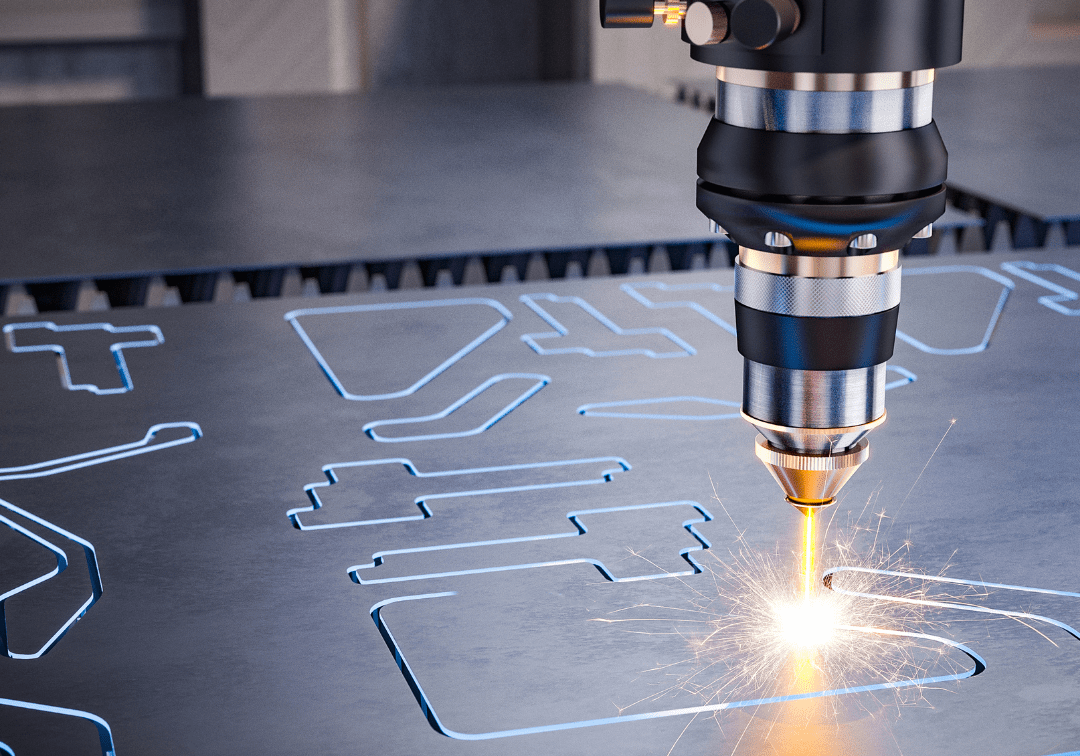
In the world of fiber laser cutting, the protective window (also known as the cover glass or debris shield) is the unsung hero. It acts as the final line of defense, protecting your expensive focusing and collimating lenses from metal splatter. However, many operators constantly face the issue of their laser protective lens burning fast, leading to costly downtime. If you are using standard Raytools laser cutting head consumables, you need to know exactly when to swap the glass before it damages the internal components.
However, because it takes the brunt of the harsh cutting environment, it is also one of the most frequently replaced consumables. Running your machine with a damaged protective window won’t just ruin your cutting quality—it can cause catastrophic, expensive damage to the entire laser head.
So, how do you know exactly when it’s time to swap it out? Here are the tell-tale signs, inspection methods, and tips to maximize the lifespan of your laser cover glass.
3 Major Signs Your Protective Window Is Failing
1. Sudden Drop in Cutting Quality
If your machine parameters haven’t changed but your cut quality suddenly declines, the protective window should be your first suspect.
Watch for:
-
Excessive dross (burrs): Hardened slag sticking to the underside of the sheet
-
Heavy striations or rough edges: Cuts are no longer smooth and clean
-
Incomplete penetration: The laser struggles to cut through, especially on thicker material
Even a small burned spot or contamination on the window can scatter the laser beam, shift the focal point, and reduce the energy density reaching the material.
2. The Laser Head Overheats
A clean, high-quality protective window allows the laser beam to pass through with near-zero absorption. However, when dust, oil, or metal splatter accumulates on the glass, those contaminants absorb the laser’s energy and turn it into heat. If your laser cutting head feels abnormally hot to the touch, or if the internal temperature sensors trigger an alarm, stop the machine immediately and check the bottom window.
3. Frequent Cutting Head Alarms
Modern laser heads (like Raytools, Precitec, or WSX) are equipped with smart sensors. If you are getting continuous “Capacitance alarms” or “Overheating warnings” on your CNC controller, a severely burned protective glass is often the root cause.
Pro Tip: Need to replace your ceramic rings due to a sensor crash? Check out our guide on choosing the right replacements here – ceramic-ring
How to Properly Inspect a Protective Window
A quick glance under shop lighting isn’t enough. Use this method for accurate inspection:
Step 1: Remove the Drawer Carefully
Take out the protective window drawer in a clean, dust-free environment to prevent secondary contamination.
Step 2: Perform the Flashlight Test
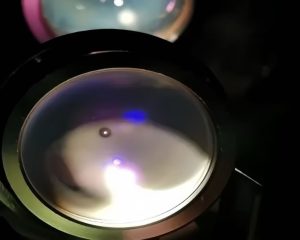
Hold the window against a dark background and shine a bright LED flashlight across the surface at a low angle.
Look for:
-
White hazy spots
-
Black burn pits
-
Yellow or brown film (often caused by contaminated assist gas)
If any of these are present, replace the window immediately.
⚠️ Do not attempt to wipe off burn pits — once the optical coating is damaged, the glass cannot be restored.
Why Are Your Windows Burning Out Too Fast?
If you find yourself replacing the protective glass daily, you have an underlying issue to solve:
-
Impure Assist Gas: Oil or moisture in your compressed air or oxygen lines will instantly coat the bottom of the lens.
-
Incorrect Piercing Parameters: Piercing too fast or too close to the material causes massive molten metal blowback directly onto the glass.
-
Low-Quality Consumables: Cheap cover glasses lack the proper anti-reflective (AR) coating. While they might survive on a 1000W machine, a standard fiber laser protective window 1064nm simply cannot withstand the intense heat of a 6000w fiber laser cover glass application. The thermal lensing effect will destroy it in hours.
The Smart Move: Invest in High-Damage-Threshold Optics
Protecting a $1,000+ focusing lens with a low-grade $5 cover glass is a costly gamble.
For stable 24/7 production and minimal unplanned downtime, invest in premium optics designed for high-power applications.
High-quality protective windows made from high-purity fused silica (JGS1) with double-sided anti-reflective coatings provide:
-
Light transmittance above 99.9% for maximum cutting efficiency
-
High damage threshold to resist thermal lensing
-
Oil- and dust-resistant coatings to extend service life
Reliable consumables protect your laser head, maintain consistent cut quality, and keep your production schedule on track.
Don’t let substandard parts dictate your uptime.