
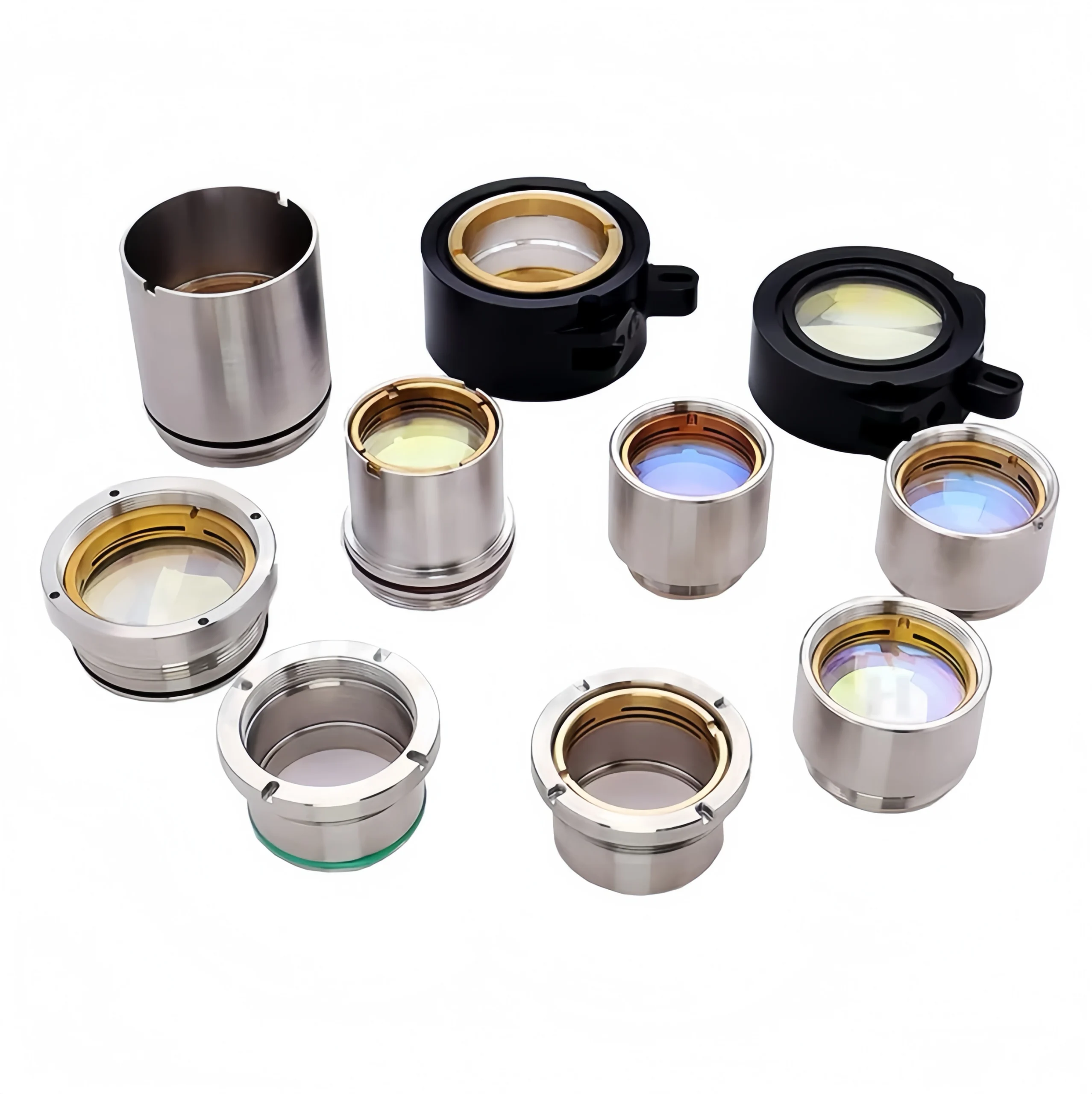
A fiber laser cutting machine may represent a major investment, but its daily performance often depends on relatively small components.
Protective windows, cutting nozzles and ceramic rings directly affect beam transmission, assist-gas flow, height sensing and cutting stability. When one of these consumables is contaminated, damaged or incorrectly matched, the result can include poor edge quality, unstable piercing, increased gas consumption and unexpected production downtime.
This creates an important purchasing question:
Should you continue buying consumables from the original equipment supplier, or can qualified aftermarket fiber laser parts deliver comparable performance at a lower total cost?
The answer depends less on the logo printed on the package and more on compatibility, manufacturing accuracy, optical quality and supplier control.
OEM and Aftermarket Laser Consumables Explained
OEM consumables are supplied by the machine manufacturer, cutting-head manufacturer or an authorized sales channel. They normally provide straightforward compatibility, but may involve higher prices, longer delivery times or limited availability for older equipment.
Aftermarket consumables are manufactured by independent suppliers to fit specific laser cutting heads and machines. Their price is often more competitive, but quality can vary significantly between suppliers.
A well-made aftermarket component can be a practical purchasing choice. A poorly specified or inconsistently manufactured component can quickly become more expensive through scrap, repeated replacement and downtime.
For this reason, buyers should evaluate the actual product specifications and supplier capabilities instead of comparing unit price alone.
Which Fiber Laser Consumables Matter Most?
1. Protective windows
The protective window acts as a barrier between the cutting environment and the more expensive optical components inside the laser head.
Metal spatter, smoke, dust and heat can gradually contaminate or damage its surface. Once transmission deteriorates, the lens may absorb more energy and create additional heat inside the cutting head.
When purchasing protective windows, confirm:
Diameter and thickness
Cutting-head brand and model
Applicable laser power
Substrate material
Coating specification
Surface quality and dimensional tolerance
Packaging and cleanliness controls
A protective window should not be selected by diameter alone. Two lenses with similar dimensions may use different coatings, edge treatments or installation structures.
2. Fiber laser cutting nozzles
The cutting nozzle controls the direction and stability of the assist-gas flow. Its geometry, orifice accuracy and concentricity can influence piercing, slag removal and final cut quality.
Before ordering, verify:
Single-layer or double-layer design
Outer diameter and overall height
Thread specification
Nozzle orifice size
Material being cut
Assist gas being used
Cutting-head model
Required quantity and replacement frequency
A low-priced nozzle with inconsistent orifice geometry can create recurring production problems that operators may mistakenly attribute to cutting parameters.
3. Laser ceramic rings
The ceramic ring provides electrical insulation and supports the capacitive height-sensing system. It is also designed to help protect the cutting head when the nozzle experiences a collision.
A compatible ceramic ring must match the mechanical dimensions and electrical requirements of the cutting head. Buyers should confirm:
Cutting-head brand and model
Outer and inner dimensions
Connector arrangement
Thread and mounting structure
Electrical conductivity path
Ceramic density and mechanical strength
An incorrect ceramic ring can cause unstable height sensing, alarm conditions or repeated nozzle collisions.
Seven Questions to Ask a Fiber Laser Consumables Supplier
1. Can you confirm compatibility before shipment?
A responsible supplier should request enough information to identify the part correctly.
Useful information includes:
Machine manufacturer and model
Cutting-head brand and model
Original part number
Dimensions of the current component
Laser power
Clear photos of the old part and packaging
If a supplier confirms compatibility without asking for any technical information, the purchasing risk is higher.
2. Are the products inspected by batch?
Consistency matters as much as the quality of an individual sample. Ask whether incoming materials, dimensions, coatings and finished components are checked before shipment.
For repeat orders, the supplier should be able to maintain stable specifications between batches.
3. Are samples available before a bulk order?
A controlled sample test allows your production team to check installation, cutting stability and service performance before approving a larger purchase.
When testing a sample, use the same machine, material, cutting parameters and maintenance procedure used with your current consumable. This produces a more meaningful comparison.
4. Does the supplier stock frequently replaced parts?
A competitive price offers little value if a critical consumable is unavailable when your machine stops.
Ask about stock availability, standard dispatch time and the supplier’s ability to support urgent orders. For high-use items, consider establishing a scheduled replenishment plan.
5. Can one supplier support multiple machine brands?
Fabrication companies often operate cutting heads from different manufacturers. Consolidating compatible consumables with one qualified supplier can reduce purchasing administration, freight costs and inventory complexity.
The supplier should still identify and label every item clearly to prevent components from being installed on the wrong machine.
6. Is technical support available after delivery?
A professional supplier should help investigate problems such as unusual lens contamination, repeated ceramic-ring failure or incorrect nozzle selection.
Technical support does not replace machine maintenance, but it can help buyers separate consumable problems from alignment, gas, parameter or operating issues.
7. What is the total cost per operating hour?
The cheapest quotation is not always the lowest-cost option.
Consider:
Replacement frequency
Production interruptions
Scrap and rework
Shipping cost
Emergency-order charges
Damage to higher-value optics
Time spent managing multiple suppliers
A stable consumable that lasts longer and arrives when required may reduce the real operating cost even when its unit price is slightly higher.
A Simple Sample-Approval Process
Before changing suppliers, establish a small approval process:
Record the current consumable specifications and operating results.
Ask the new supplier to confirm compatibility in writing.
Inspect the sample dimensions and packaging on arrival.
Install the part according to the machine’s maintenance procedure.
Run it under normal production conditions.
Compare cut quality, stability and replacement frequency.
Approve the item for repeat purchasing only after consistent results.
For optical components, correct handling is essential. Contamination introduced during installation can make a good protective window appear defective.
When Should You Choose OEM Consumables?
OEM purchasing may be preferable when:
The application has an unusually demanding certified process
A proprietary component cannot be reliably matched
The buyer does not have enough information to identify the part
Qualified aftermarket consumables are especially attractive for frequently replaced items, mixed-brand machine fleets, older equipment and buyers seeking a more flexible supply chain.
Why Buyers Work with Lasvio
Lasvio supplies fiber laser cutting and welding components, including protective windows, copper nozzles, ceramic rings, focusing and collimating optics, cutting heads and related maintenance parts.
Our sourcing process is designed to help international buyers:
Confirm compatibility before ordering
Consolidate multiple consumables in one shipment
Evaluate products through sample testing
Source parts for different laser-head brands
Maintain stock of frequently used components
Obtain technical support when a part fails unexpectedly
Instead of selecting a replacement from appearance alone, our team checks the machine information, cutting-head model, dimensions and application requirements.
Request a Compatibility Check and Sample
Not sure which nozzle, protective window or ceramic ring fits your fiber laser?
Send Lasvio the following information:
Machine brand and model
Cutting-head brand and model
Laser power
Original part number, if available
Dimensions or clear product photos
Estimated monthly quantity
Our team will identify the suitable specification, prepare a quotation and recommend a sample-testing plan before your bulk order.
Reduce sourcing uncertainty before it becomes production downtime. Contact Lasvio for a fiber laser consumables compatibility check and quotation.
Frequently Asked Questions
Are aftermarket fiber laser consumables as good as OEM parts?
Quality depends on the manufacturer, specifications and inspection process. Properly matched aftermarket components can offer reliable performance, but buyers should test samples and evaluate consistency before placing a bulk order.
How can I identify the correct protective lens?
Provide the cutting-head brand and model, lens diameter, thickness, laser power and original part number. Photos of the existing lens and package can also help confirm compatibility.
Can I use the same nozzle on different laser cutting heads?
Not necessarily. Nozzles can differ in diameter, height, thread, orifice size and internal structure. Always confirm the exact cutting-head model and cutting application.
Should I keep spare protective lenses and ceramic rings in stock?
Yes. Frequently used and production-critical consumables should be held in suitable quantities based on machine count, replacement history and supplier delivery time.
Can Lasvio combine different consumables in one order?
Yes. Buyers can consolidate compatible nozzles, protective windows, ceramic rings and other laser components into one shipment, subject to product availability.