
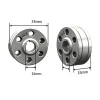
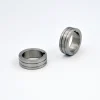
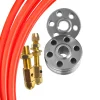
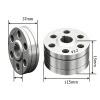
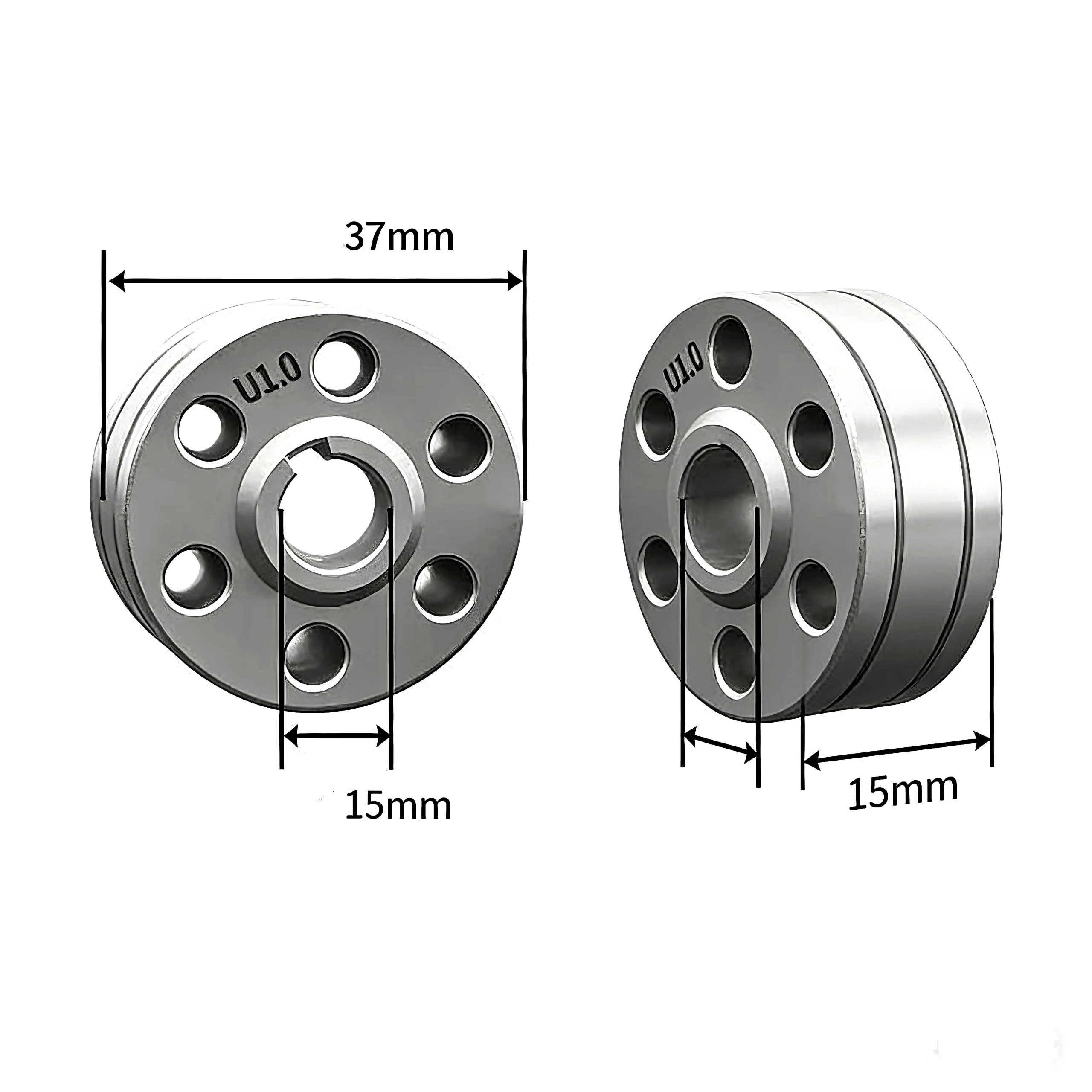
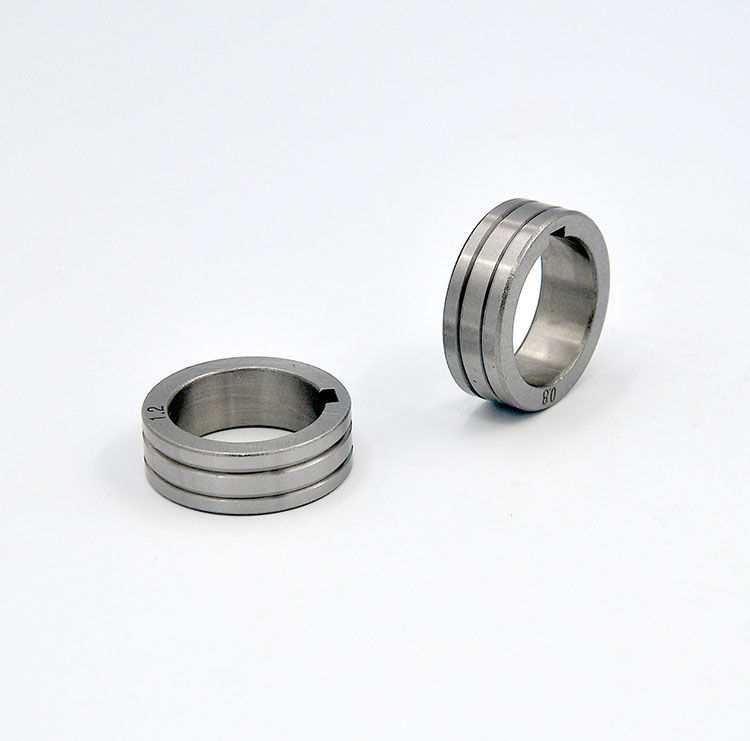
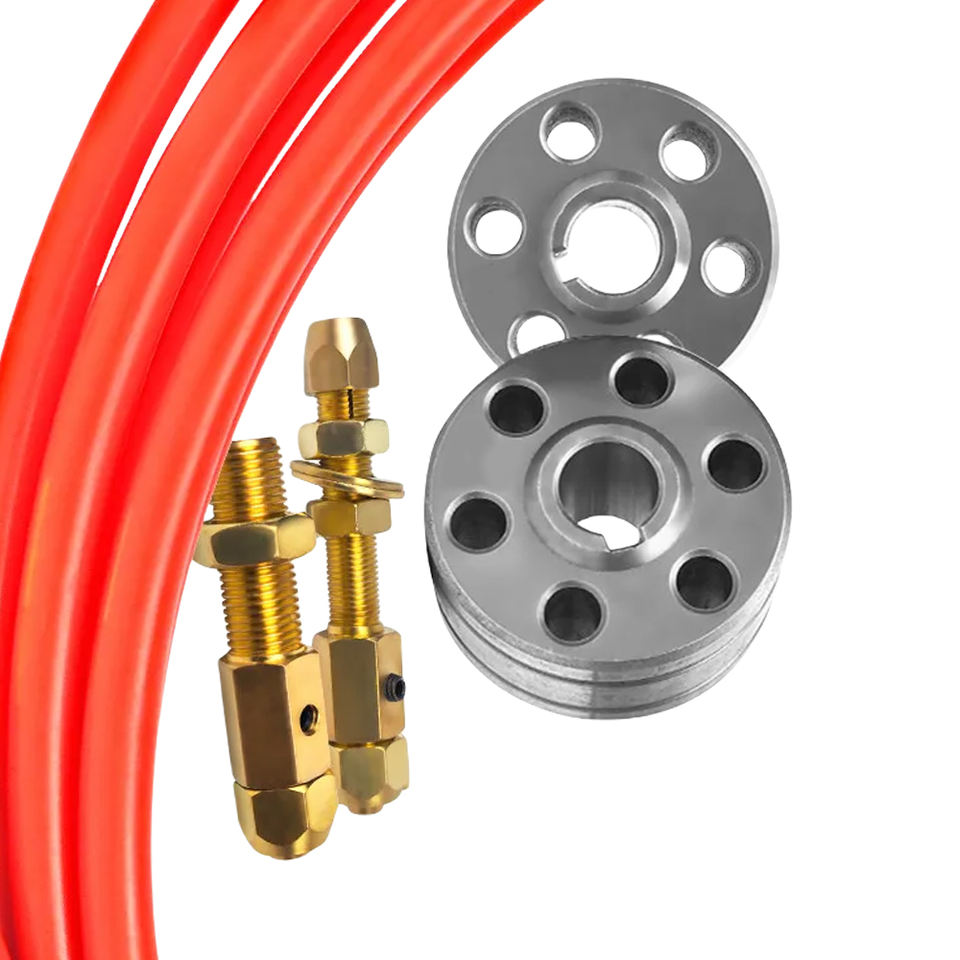
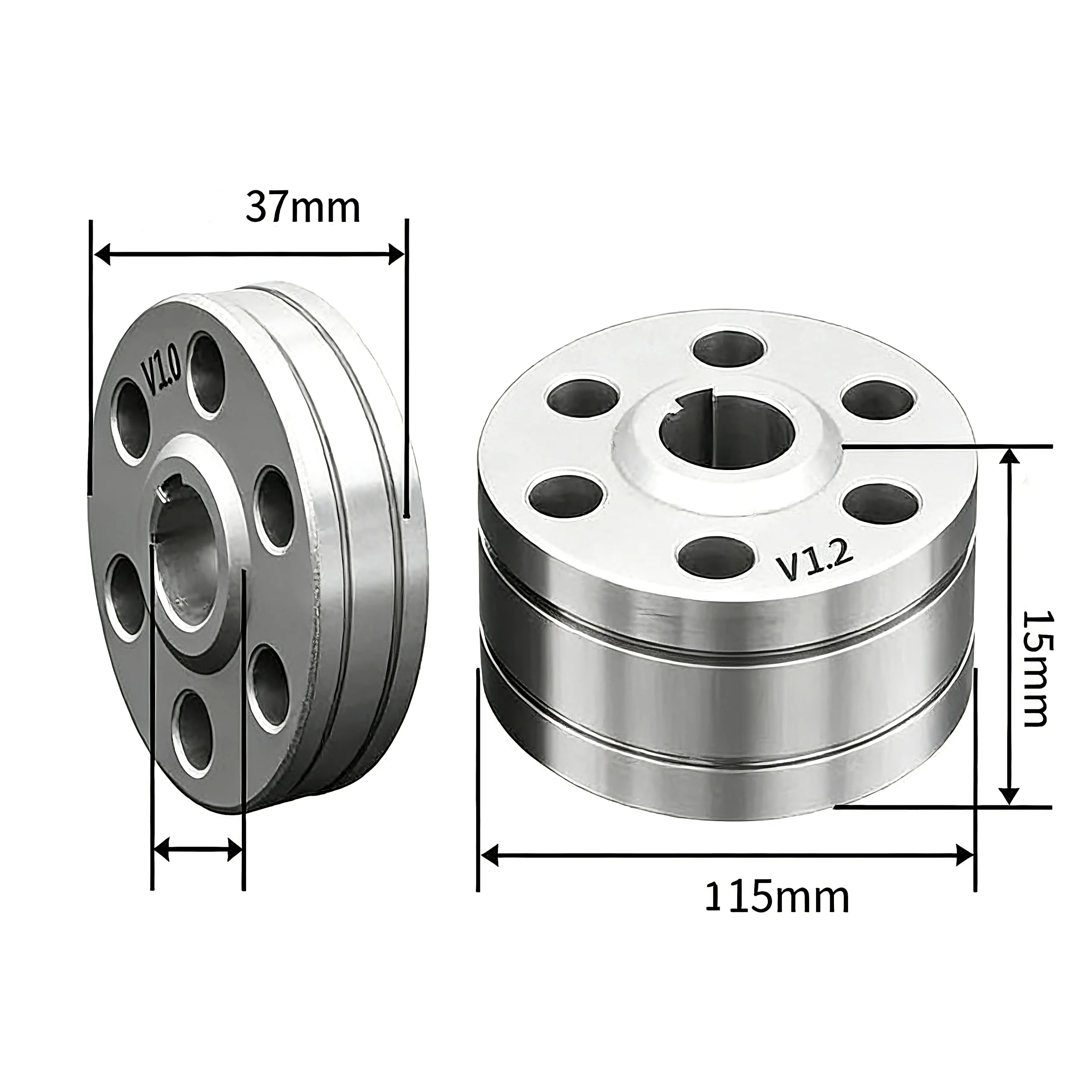
The laser feeding rollers are the essential drive components that ensure the consistent and smooth delivery of filler wire into the laser melt pool. At Lasvio, we provide high-precision rollers engineered to eliminate wire slippage and vibration, which are the primary causes of weld defects in fiber laser systems. Our rollers are CNC-machined from hardened bearing steel and chrome-plated to offer superior wear resistance and thermal stability. By selecting the correct laser feeding rollers, you can maintain a constant feeding speed, resulting in a uniform weld bead profile and significantly reduced downtime during long-duty industrial cycles.
Each laser feeding roller is designed with a specific groove geometry tailored to different wire materials. For instance, our V-groove rollers are optimized for hard wires like stainless steel and carbon steel, providing the necessary friction without deforming the wire. Conversely, our U-groove rollers are crafted for softer wires like aluminum, ensuring that the wire maintains its circular cross-section to prevent jamming in the copper nozzles. By utilizing a precision-matched drive system, fabricators can achieve a higher level of process control, ensuring that every centimeter of filler wire is utilized efficiently without compromising the integrity of the final weld.
Technical Benefits of Our Laser Feeding Rollers: Choosing the right laser feeding rollers is not just about size; it is about geometry. V-Groove rollers are the workhorse of the industry, perfect for stiff materials like ER308L stainless steel. The sharp 60-degree or 90-degree angle provides the perfect grip for hard wires. However, if you use a V-groove for aluminum, the sharp edges will shave the wire, leading to aluminum dust buildup. For aluminum alloys like ER5356, U-Groove rollers are mandatory as they cradle the wire gently to avoid any physical deformation.
Maintenance Tips for Your Wire Drive System: To maximize the lifespan of your laser feeding rollers, it is vital to keep the drive housing clean. Metal dust accumulation can act as an abrasive, wearing down the precision grooves and leading to intermittent feeding speeds. We recommend checking the roller tension daily; over-tensioning is a common mistake that leads to premature wear of both the rollers and the wire feeding tip. A simple rule is to tighten the tensioner just enough so that you can not stop the wire with your gloved fingers, but no further. This consistency is the secret behind achieving the gold-standard weld seams required in automotive and aerospace manufacturing where structural integrity is non-negotiable.