
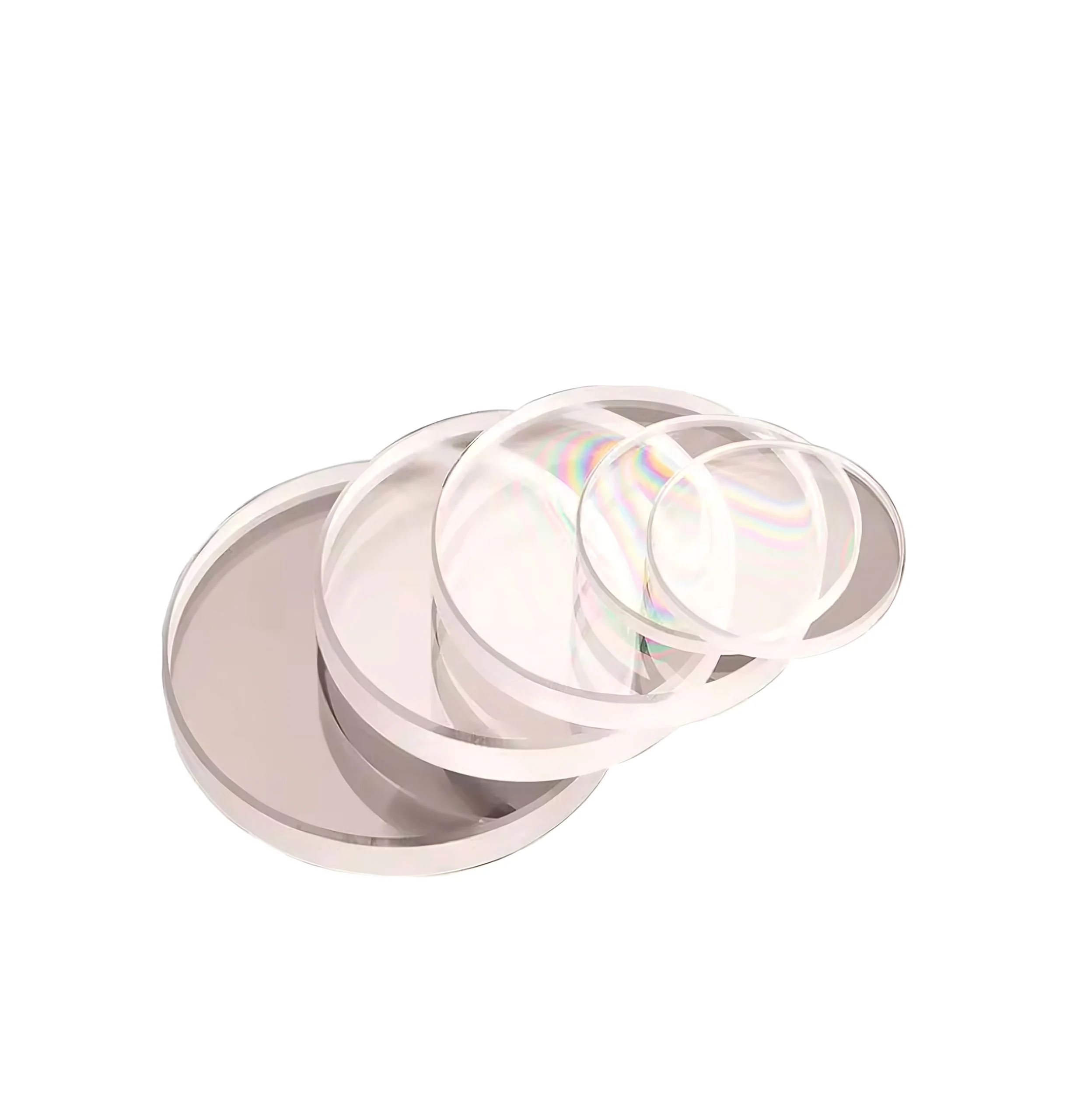
To choose the correct protective lens for a handheld laser welding gun, confirm the welding head model, lens position, outside diameter, thickness, and working wavelength before ordering. A lens that looks similar can still have the wrong dimensions, coating, or mounting position. When the part number is unavailable, send the supplier a clear photo of the gun-head nameplate, the old lens, and its measured dimensions.
A protective lens is inexpensive compared with the optics behind it, but choosing the wrong one can cause poor fit, contamination leaks, temperature alarms, or repeated lens failure. The safest buying method is to identify the complete optical position rather than ordering from diameter alone.
What is a laser welding protective lens?
The protective lens, also called a protective window, is the replaceable optical component positioned between the welding process and the more expensive optics inside the gun head. Its job is to help isolate smoke, spatter, and dust from the focusing optics while allowing the working laser wavelength to pass.
It is a consumable. Replacement frequency depends on the process, shielding gas, nozzle condition, sealing, material contamination and handling. If you are unsure whether a lens has reached the end of its useful life, compare its condition with these protective-window replacement warning signs.
Five details to confirm before ordering
1. Welding gun or head model
Start with the nameplate. Record the manufacturer, complete model and any revision number. Two gun heads from the same brand may use different cartridges or protective-lens sizes. Machines sold under a distributor’s name may also use a welding head made by another company.
If the label is missing, photograph the whole gun, cable connection, nozzle end, lens drawer and old lens package. These details give the supplier more information than a message that only says “I need a laser welding lens.”
2. Lens position
A handheld laser welding head can contain more than one replaceable optical element. Depending on the design, the protective component may sit near the process end, inside a drawer or at another specified position. Upper and lower protective lenses are not automatically interchangeable.
Before removing several optical parts at once, mark their positions. If you need help identifying them, see which lens fails first inside a laser welding head.
3. Outside diameter and thickness
Measure the old lens with a clean digital caliper. Record both outside diameter and thickness in millimetres. Do not estimate the size from the cartridge or from a ruler held beside the lens.
A small thickness difference can affect how the lens sits in the holder or how the seal is compressed. Also check whether the original component is round, rectangular or supplied as a complete cartridge. If the old lens is chipped, measure an undamaged edge and confirm the result against the head model.
4. Wavelength and coating
Many fibre-laser welding systems operate around 1064–1080 nm, but the replacement must match the equipment specification. Do not assume that every clear window with the same diameter has the correct optical coating.
Ask the supplier to confirm that the lens is intended for your laser type and working wavelength. Coating quality, surface condition and cleanliness affect transmission and heat absorption. Avoid touching the optical surfaces with bare fingers.
5. Holder, seal and installation direction
Inspect the lens drawer, retaining ring and seal. A correct lens can still fail early when the holder contains dust, the sealing ring is damaged or the component is installed incorrectly. Some assemblies are sold as a bare lens, while others are supplied with a frame or cartridge. State which version you need.
Why diameter alone is not enough
Ordering by a description such as “20 mm laser lens” leaves out several important details. The thickness may differ, the optical coating may be intended for another wavelength, or the lens may belong in a different position. Even when it fits physically, it may not be the correct optical component for that head.
A useful compatibility request should include:
- Machine brand and model
- Welding head or gun brand and complete model
- Laser source type and rated power
- Lens position in the head
- Outside diameter and thickness
- Photos of the nameplate, holder and old lens
- Required quantity
With this information, a supplier can check compatibility before quoting instead of guessing after the shipment arrives.
If the new protective lens burns again
Repeated failure is not always a lens-quality problem. Replacing the lens without correcting the source of contamination or heat can lead to the same result within hours or days.
Check the following points:
- Lens drawer cleanliness: Dust introduced during replacement can create a local hot spot.
- Seal condition: A damaged seal may allow smoke or particles into the optical path.
- Shielding gas: Low flow, leaks or contaminated gas can increase smoke and spatter near the nozzle.
- Nozzle condition: A damaged, blocked or incorrectly fitted nozzle can disturb gas flow. Use this laser welding nozzle overheating guide when the nozzle is also running hot.
- Process setup: Incorrect focus, excessive power for the joint or unstable operating distance may increase back-spatter.
- Cleaning method: Reused wipes, workshop air and fingerprints can contaminate a new lens. Follow a controlled protective-lens cleaning procedure.
If the same position repeatedly overheats after these checks, stop replacing lenses blindly. Inspect the holder, nozzle, seals and gun head as one system.
Bare lens or complete cartridge?
A bare lens is practical when the original holder is clean, undamaged and easy to service. A complete cartridge can be the better choice when the frame, retaining structure or seal is worn, or when maintenance staff need a faster swap with less direct handling of the optical surface.
For maintenance stock, some workshops keep both: economical bare lenses for planned servicing and complete cartridges for urgent replacement. The correct approach depends on the head design and local maintenance routine.
Lasvio protective lenses, nozzles and welding-head parts
Lasvio supplies laser welding consumables and replacement parts, including protective lenses, welding nozzles and selected gun-head components. Compatibility is checked against the information provided by the customer; a lens should not be selected from appearance alone.
For a faster quotation, send us the welding-head nameplate, photos of the old lens and holder, measured diameter and thickness, and the required quantity. If the cause of failure is unclear, include a photo of the damaged lens and nozzle. You can also browse the Lasvio product range before contacting us.
Frequently asked questions
Can I use a protective lens with the same diameter?
Not necessarily. Diameter is only one specification. Thickness, coating, wavelength, optical position and holder design must also match.
How do I identify a lens when there is no part number?
Provide the welding-head brand and model, lens position, measured diameter and thickness, plus clear photos of the head nameplate, holder and old lens. The supplier can use the complete set of information to check compatibility.
Are laser cutting and laser welding protective lenses interchangeable?
Do not assume they are. They may differ in dimensions, coating, holder design and intended optical position. Confirm the exact head model and application.
Should I replace a scratched lens?
Replace it when scratches, spots, coating damage or contamination affect the clear optical area or cannot be removed safely. Continuing to use a damaged window can increase absorption and heat.
Why does a new lens become dirty so quickly?
Common causes include a contaminated holder, a leaking seal, poor shielding-gas flow, nozzle damage, excessive back-spatter or improper handling during installation.
What should I send for a quotation?
Send the gun-head brand and model, laser power, lens position, diameter, thickness, photos and quantity. If you need nozzles or other gun-head parts at the same time, include their photos and dimensions so the consumables can be checked together.